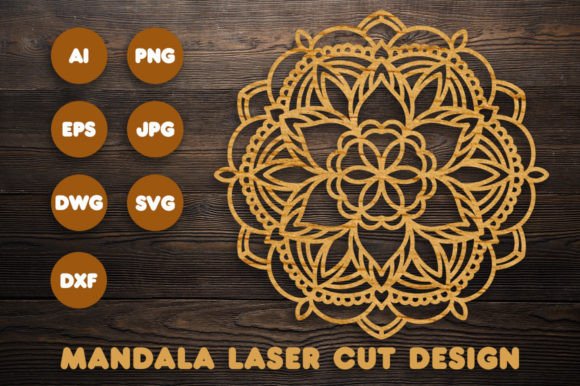
Reviewing the 3D Floral Mandala Svg Files for Cricut
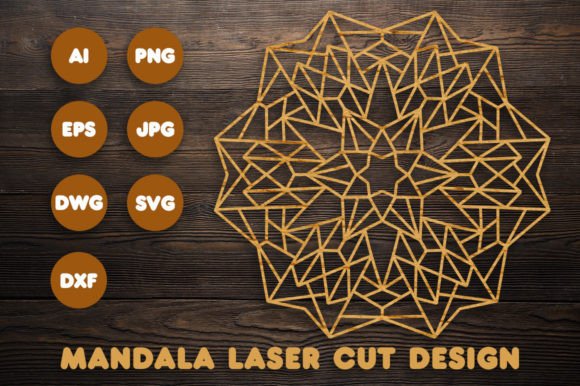
As a designer who spends more time troubleshooting stitch errors than admiring finished products, I approach every new digital asset with a healthy dose of skepticism. We have all seen designs that look stunning in a vector preview but turn into a tangled mess on the hoop. Today, I am putting 3D Floral Mandala Svg Files for Cricut through its paces to see if it holds up as a viable option for real-world embroidery projects. While the product description highlights its origins as a laser cutting file available in SVG, EPS, AI, and PNG formats, my focus here is strictly on its potential application within machine embroidery workflows, specifically for those looking to create intricate ornaments or detailed laser cutting accents.
First Impressions: Visual Personality and Mood
The moment you open the file, the complexity is immediately apparent. A mandala design inherently demands precision, and this particular iteration strikes a balance between ornate detail and structural integrity. The mood it creates is one of serene elegance, making it suitable for a wide range of aesthetics, from bohemian chic to modern minimalist decor. Unlike busy floral patterns that can feel chaotic when stitched, the radial symmetry of this mandala offers a natural focal point that guides the eye inward.
For designers considering this for their portfolio, the visual personality is versatile. It feels substantial enough to stand alone on a large tote bag but delicate enough to serve as a central motif on a baby onesie. The intricate lines suggest a high level of craftsmanship, which translates well into perceived value for handmade goods. However, the "3D" aspect mentioned in the title often implies texture or layering. In an embroidery context, this usually means the design relies heavily on fill stitches to create depth rather than physical dimension. This distinction is crucial for managing client expectations regarding the final tactile experience of the finished product.
Real-World Application: From Digital File to Physical Goods
I recently evaluated how this embroidery file would perform on a custom embroidered tote bag intended for a boutique client. The goal was to create a statement piece that felt luxurious yet durable. Placing the mandala in the center of a heavy-duty canvas tote, the design’s symmetry allowed it to dominate the space without overwhelming it. The result was striking. The intricate details held up well against the coarse texture of the canvas, provided the correct stabilizer was used.
Beyond totes, this design shows immense promise for custom apparel. Imagine this mandala centered on the back of a crewneck sweatshirt, utilizing a monochromatic thread palette for a sophisticated look. Or perhaps placed over the heart of a white t-shirt with vibrant, contrasting threads for a pop of color. For small business owners and Etsy sellers, these applications are gold. The design works beautifully for personalized gifts, such as wedding favors or holiday ornaments, where the circular shape naturally fits the theme of celebration and unity.
I also considered its use in nursery decor. Embroidered wall hangings featuring mandalas are incredibly popular right now. The soft, organic curves of the floral elements soften the geometric rigidity, making it perfect for a gender-neutral nursery theme. When paired with a simple wooden hoop, the embroidery project becomes a ready-to-hang art piece, significantly increasing its marketability compared to a plain fabric square.
Technical Considerations and Potential Pitfalls
No design is without its challenges, and understanding where 3D Floral Mandala Svg Files for Cricut might struggle is just as important as knowing where it shines. Because mandalas are dense with detail, they require careful planning regarding stitch density. If the design is too dense, it can become stiff and unyielding, especially on stretchy fabrics like jersey knits. For sweatshirt embroidery or cap embroidery, you must ensure the underlay stitches are sufficient to stabilize the base fabric; otherwise, the intricate details may pucker or shift during stitching.
Fabric choice is another critical factor. This design performs best on stable, woven fabrics such as cotton, linen, or denim. Using it on thin, slippery silks or highly textured bouclé wool can obscure the fine details, turning a beautiful mandala into a muddy blob. Similarly, while dark fabrics can make bright threads pop, they can also hide subtle shading effects if the thread count is low. Always test your thread colors against your specific fabric swatch before committing to a full production run.
Another area requiring caution is small hoop sizes. Attempting to stitch a highly detailed mandala in a tiny hoop can lead to registration issues and excessive trimming of the design edges. It is generally safer to stick to medium to large hoops to allow the machine to execute the complex pathing smoothly. Additionally, if you plan to use this for embroidered patches, be mindful of the edge finish. A satin stitch border will help secure the perimeter, but ensure the border does not cut off essential design elements.
Practical Designer Notes for Success
- Test on Scrap Fabric: Never go straight to the final garment. Stitch out a sample on the exact fabric you intend to use to check for tension issues and color accuracy.
- Check Stabilizer Compatibility: For dense fills, a cut-away stabilizer is often necessary to prevent distortion, especially for items that will undergo frequent washing.
- Review Stitch Density: Ensure the design’s stitch density is appropriate for the fabric weight. Too much thread on light fabric causes puckering; too little on heavy fabric looks sparse.
- Black and White Mockups: Convert the design to black and white to evaluate contrast and readability. If the details disappear in grayscale, they may get lost in color on fabric.
- Licensing Verification: Since this file originates from a laser cutting context, double-check the license terms if you plan to sell the embroidered versions commercially. Confirm whether the digital embroidery file rights include commercial use for physical goods.
Final Verdict on Visual Appeal and Brand Value
Incorporating 3D Floral Mandala Svg Files for Cricut into your creative workflow can significantly elevate the perceived professionalism of your brand. The symmetry and intricacy of the mandala convey a sense of care and attention to detail that customers appreciate. It is not just a decoration; it is a design statement. Whether you are creating holiday embroidery collections, baby embroidery sets, or upscale home decor items, this design adds a layer of sophistication that generic floral patterns often lack.
For craft business entrepreneurs, the versatility of this design allows for cross-platform marketing. You can showcase the same motif on tote bags, pillow covers, and kitchen towels, creating a cohesive collection that appeals to different buyer segments. The ability to offer personalized gifts with such a recognizable and aesthetically pleasing motif can drive higher engagement and repeat sales.
Ultimately, the success of this project hinges on execution. The design itself is strong, offering a beautiful blend of nature and geometry. By respecting the technical limitations of embroidery—such as fabric stability, stitch density, and proper stabilization—you can transform this digital asset into a tangible, high-value product. It is a reliable tool for any designer looking to add intricate, elegant touches to their handmade product lineup.